
Events

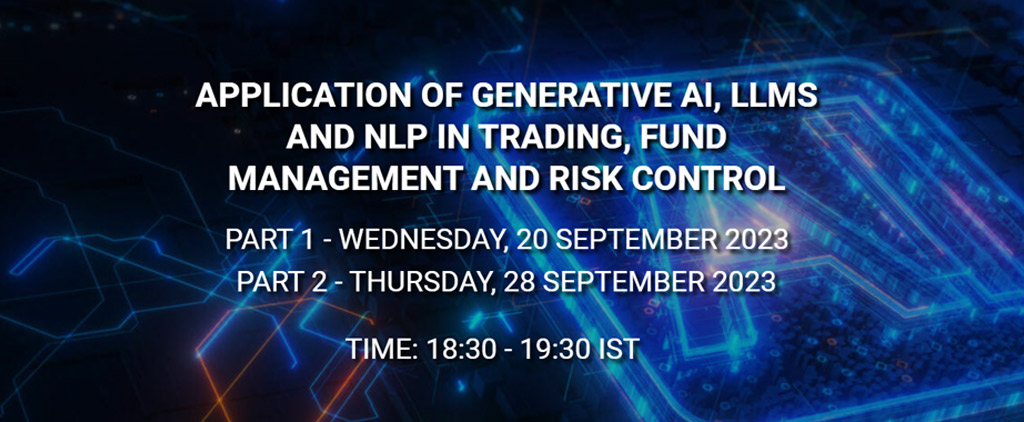
Application of Generative AI, LLMs and NLP in Trading, Fund Management and Risk Control
This two-part webinar is of 60-minutes duration each – it is presented in the format of a fireside chat with a small panel of subject... [Read more]

Utilizing Sentiment Analysis for Effective Assets Allocation, May 31, 2023
Alexandria Technology is a leading provider of financial sentiment data and OptiRisk Systems is well known for financial models for asset allocation enhanced by sentiment. Alexandria and OptiRisk are presenting the results of their collaborative research for... [Read more]
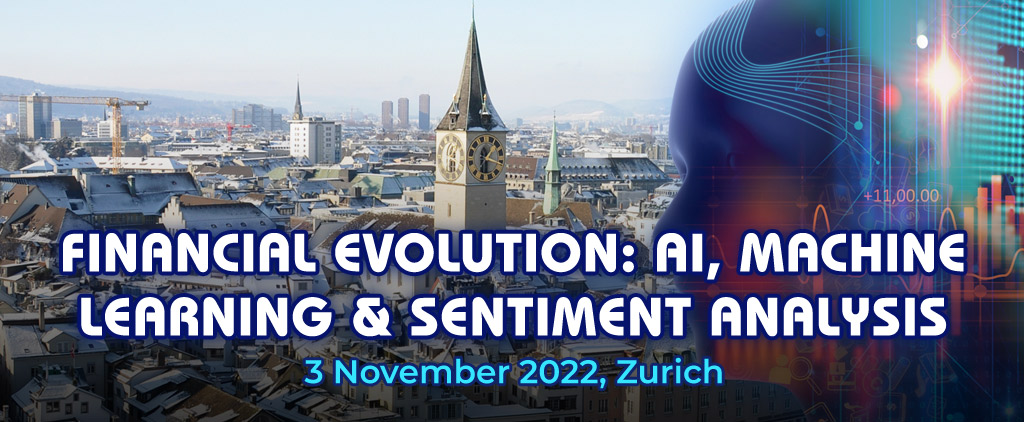
Financial Evolution: AI, Machine Learning & Sentiment Analysis, Zurich, November 03, 2022
Innovations in Finance and harnessing of Technology have resulted in making the term Fintech a portmanteau word. In the evolution of the BFSI sector Fintech has assumed a pivotal role; but it also had an impact on traditional... [Read more]

Financial Evolution: AI, Machine Learning and Sentiment Analysis, April 6-7, 2022
Join us on 6 and 7 April to know more about how Fintech is playing a crucial part in the evolution of the BFSI sector and its impact on traditional order. The rise of Artificial Intelligence and Machine Learning has improved many parts of investing models and technology while disrupting... [Read more]
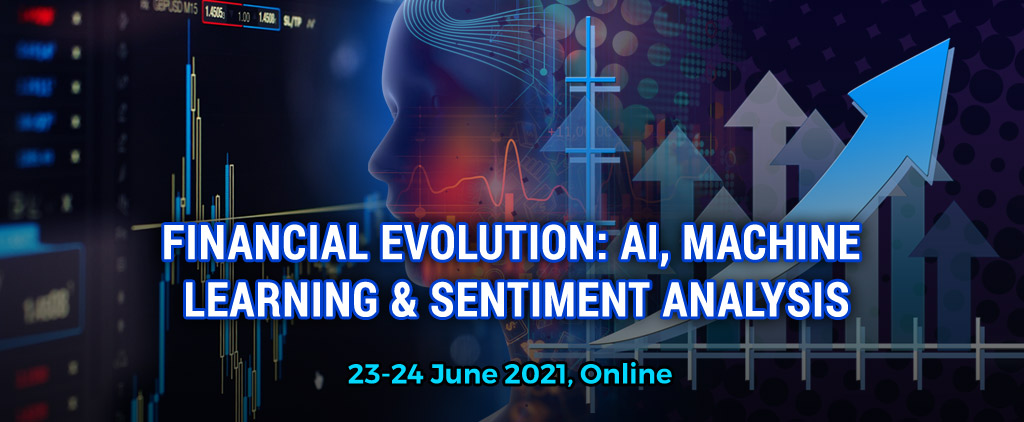
Financial Evolution: AI, Machine Learning and Sentiment Analysis, June 23-24, 2021
Join us for the biggest event in our annual calendar on 23 – 24 June 2021. This event, taking place in the UK Time Zone, congregates hundreds of investment professionals all eager to explore deeper into the fields of AI, Machine Learning and Sentiment Analysis for... [Read more]
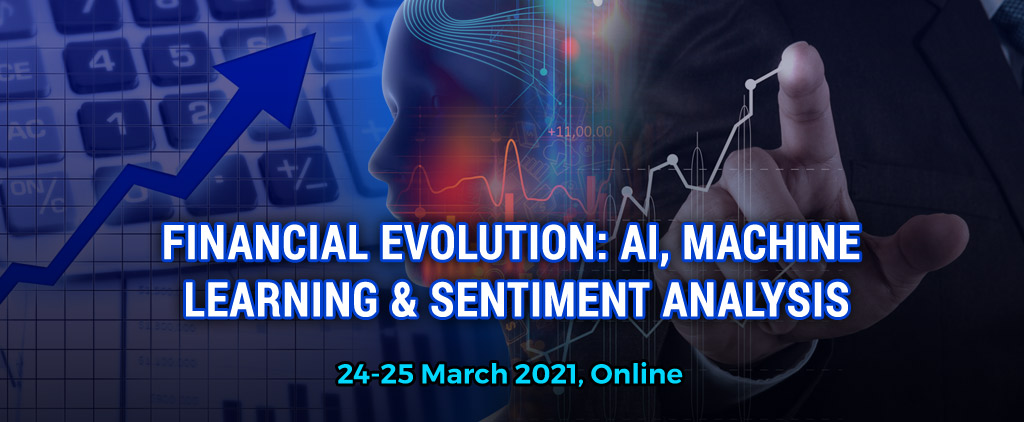
Financial Evolution: AI, Machine Learning and Sentiment Analysis, March 24-25, 2021
We are delighted to invite you to our annual conference Financial Evolution: AI, Machine Learning and Sentiment Analysis on 24-25 March 2021.... [Read more]

Rise to the Moment: A New World of Risk & Resilience, February 22-24, 2021
“Rise to the Moment: A New World of Risk & Resilience” will be a dynamic live virtual event focused on the challenges and opportunities that risk managers are encountering at this uncertain times. Combining innovation and collaboration, Rise to the Moment... [Read more]

Financial Evolution: AI, Machine Learning & Sentiment Analysis, Online, 23-26 September 2020
One of the most awaited events of the year is going to be held from 23-26 September in an online format. The Conference will explore topics such as start-ups and new opportunities in FinTech, AI, alternative data and quantitative fund management using Sentiment Analysis.... [Read more]

Financial Evolution: AI, Machine Learning & Sentiment Analysis, Zurich, 29 October 2019
After the success of last year’s conference in Zurich, OptiRisk will be participating and presenting at the 2019 Zurich conference on "Financial Evolution: AI, Machine Learning & Sentiment Analysis". We’re excited to hear more about what the Swiss Finance community is doing in this space... [Read more]

Financial Evolution: AI, Machine Learning & Sentiment Analysis, London, 25 – 26 June 2019
The biggest event in our annual calendar is set to take place on 25 – 26 June 2019. The London stop of the “Financial Evolution” conference series congregates hundreds of investment professionals all eager to explore deeper into the fields of AI, Machine Learning and... [Read more]

Financial Evolution: AI, Machine Learning and Sentiment Analysis, Malta, 15 May 2019
Malta’s economy is booming as it strives to become an international finance centre. As a new wave of fintech companies establish themselves on this small island, OptiRisk are also travelling there to unveil our work and find out more about this buzz. In partnership with UNICOM, we will be in... [Read more]

Financial Evolution: AI, Machine Learning and Sentiment Analysis, Hong Kong, 20 March 2019
In 2019, OptiRisk will be returning to Hong Kong again for the third consecutive year. As a Knowledge Partner of the event, we will be showcasing the work we’ve done in sentiment analysis for equities and fixed income. Additionally, we are also looking forward to learning and exploring more about... [Read more]

Financial Evolution: AI, Machine Learning and Sentiment Analysis, Mumbai, 14 March 2019
To kick off the global series of Finance conferences for 2019, OptiRisk is proud to announce that they will be participating in the upcoming Mumbai conference held at the prestigious location of the National Stock Exchange. This will be OptiRisk’s first time presenting in India’s Finance capital of Mumbai, alongside... [Read more]
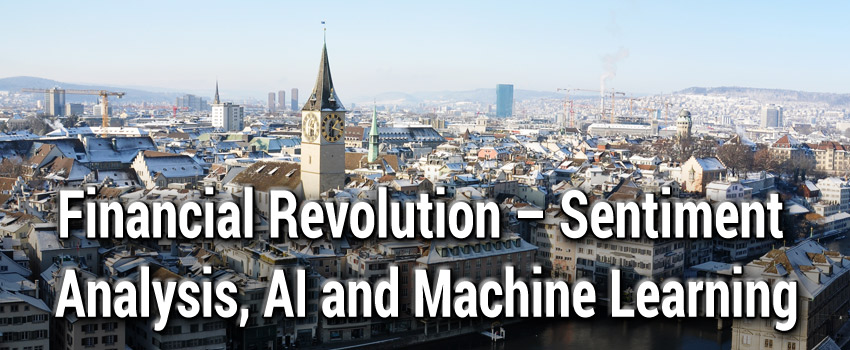
Financial Revolution – Sentiment Analysis, AI and Machine Learning, Zurich, 30 October 2018
Presentations at this conference explain how Sentiment Analysis, AI and Machine Learning are impacting on and benefiting the Finance Sector; explores the most essential issues at the intersection of research and practice, and demonstrates the latest models and methods, demonstrating how AI and Machine Learning methods can be used to... [Read more]

AI, Machine Learning and Sentiment Analysis Applied to Finance, London, 27-28 June 2018
This is the 8th consecutive year that this event has been held in London. It is expected to be a great success with 150+ attendees from 25 different countries and counting. Gautam Mitra, Xiang Yu and Christina Erlwein-Sayer from OptiRisk are all giving presentations, along with Peter Hafez,... [Read more]

AI, Machine Learning and Sentiment Analysis Applied to – Financial Markets – Retail and Consumer Markets, 13 – 14 March 2018, Bangalore, India
For the second time, OptiRisk are travelling to Bangalore, India for UNICOM’s event. This conference expands the focus of AI and Sentiment Analysis to include Retail and Consumer Markets as well as Financial Markets. OptiRisk will be joined by many international and local experts including Krishma Singla, IBM, Nishant... [Read more]

AI and Sentiment Analysis in Finance, Hong Kong, 8 March 2018
As part of our growing interest in the Asian markets, OptiRisk has agreed to speak at this conference: AI and Sentiment Analysis in Finance, Hong Kong. The keynote speakers at this event are Prof. Lei Chen, Hong Kong University of Science and Technology (HKUST) and Johnson Poh, Singapore Management... [Read more]
Optimum Decision Making and Risk Analysis Applied to Finance, UCL, London, 12-16 February 2018
Optimisation technologies have become key tools in making intelligent business decisions and are often adopted in the finance industry. This week-long interactive workshop is entirely presented by OptiRisk experts. Participants learn how to formulate and develop their own optimisation models and how to use state-of-the-art commercial solvers. They will acquire... [Read more]
News
Strata Data Conference, London, 22 May 2018
OptiRisk presented the latest developments on the SENRISK project at the Strata Data Conference in London, 22 May 2018. Dr. Christina Erlwein-Sayer gave a talk on “Macroeconomic news sentiment: Enhanced risk assessment for sovereign bond spreads” in the Findata day of the Strata Data... [Read more]

11th International Conference on Computational and Financial Econometrics (CFE 2017), University of London, 16-18 December 2017
OptiRisk presented at the 11th International Conference on Computational and Financial Econometrics (CFE 2017) at the University of London, UK, 16-18 December 2017. This conference was organized by the CFEnetwork, Birbeck University of London and King’s College London. Presentations covered topics related to computational, statistical and econometric data... [Read more]
BigDataFinance Conference, LSE, London, 4 – 5 October 2017
Our senior quantitative analyst, Dr. Christina Erlwein-Sayer, presented an invited session at BigDataFinance conference on 4 - 5 October 2017 on the topic of Sentiment Analysis for Credit Risk and Portfolio Construction. It was organised by Tampere University of Technology and AllianceBerstein as part of the EU program, BigDataFinance. Keynote speakers... [Read more]


Events
Application of Generative AI, LLMs and NLP in Trading, Fund Management and Risk Control
This two-part webinar is of 60-minutes duration each – it is presented in the format of a fireside chat with a small panel of subject... [Read more]
Utilizing Sentiment Analysis for Effective Assets Allocation, May 31, 2023
Alexandria Technology is a leading provider of financial sentiment data and OptiRisk Systems is well known for financial models for asset allocation enhanced by sentiment. Alexandria and OptiRisk are presenting the results of their collaborative research for... [Read more]
Financial Evolution: AI, Machine Learning & Sentiment Analysis, Zurich, November 03, 2022
Innovations in Finance and harnessing of Technology have resulted in making the term Fintech a portmanteau word. In the evolution of the BFSI sector Fintech has assumed a pivotal role; but it also had an impact on traditional... [Read more]
Financial Evolution: AI, Machine Learning and Sentiment Analysis, April 6-7, 2022
Join us on 6 and 7 April to know more about how Fintech is playing a crucial part in the evolution of the BFSI sector and its impact on traditional order. The rise of Artificial Intelligence and Machine Learning has improved many parts of investing models and technology while disrupting... [Read more]
Financial Evolution: AI, Machine Learning and Sentiment Analysis, June 23-24, 2021
Join us for the biggest event in our annual calendar on 23 – 24 June 2021. This event, taking place in the UK Time Zone, congregates hundreds of investment professionals all eager to explore deeper into the fields of AI, Machine Learning and Sentiment Analysis for... [Read more]
Financial Evolution: AI, Machine Learning and Sentiment Analysis, March 24-25, 2021
We are delighted to invite you to our annual conference Financial Evolution: AI, Machine Learning and Sentiment Analysis on 24-25 March 2021.... [Read more]
Rise to the Moment: A New World of Risk & Resilience, February 22-24, 2021
“Rise to the Moment: A New World of Risk & Resilience” will be a dynamic live virtual event focused on the challenges and opportunities that risk managers are encountering at this uncertain times. Combining innovation and collaboration, Rise to the Moment... [Read more]
Financial Evolution: AI, Machine Learning & Sentiment Analysis, Online, 23-26 September 2020
One of the most awaited events of the year is going to be held from 23-26 September in an online format. The Conference will explore topics such as start-ups and new opportunities in FinTech, AI, alternative data and quantitative fund management using Sentiment Analysis.... [Read more]
Financial Evolution: AI, Machine Learning & Sentiment Analysis, Zurich, 29 October 2019
After the success of last year’s conference in Zurich, OptiRisk will be participating and presenting at the 2019 Zurich conference on "Financial Evolution: AI, Machine Learning & Sentiment Analysis". We’re excited to hear more about what the Swiss Finance community is doing in this space... [Read more]
Financial Evolution: AI, Machine Learning & Sentiment Analysis, London, 25 – 26 June 2019
The biggest event in our annual calendar is set to take place on 25 – 26 June 2019. The London stop of the “Financial Evolution” conference series congregates hundreds of investment professionals all eager to explore deeper into the fields of AI, Machine Learning and... [Read more]
Financial Evolution: AI, Machine Learning and Sentiment Analysis, Malta, 15 May 2019
Malta’s economy is booming as it strives to become an international finance centre. As a new wave of fintech companies establish themselves on this small island, OptiRisk are also travelling there to unveil our work and find out more about this buzz. In partnership with UNICOM, we will be in... [Read more]
Financial Evolution: AI, Machine Learning and Sentiment Analysis, Hong Kong, 20 March 2019
In 2019, OptiRisk will be returning to Hong Kong again for the third consecutive year. As a Knowledge Partner of the event, we will be showcasing the work we’ve done in sentiment analysis for equities and fixed income. Additionally, we are also looking forward to learning and exploring more about... [Read more]
Financial Evolution: AI, Machine Learning and Sentiment Analysis, Mumbai, 14 March 2019
To kick off the global series of Finance conferences for 2019, OptiRisk is proud to announce that they will be participating in the upcoming Mumbai conference held at the prestigious location of the National Stock Exchange. This will be OptiRisk’s first time presenting in India’s Finance capital of Mumbai, alongside... [Read more]
Financial Revolution – Sentiment Analysis, AI and Machine Learning, Zurich, 30 October 2018
Presentations at this conference explain how Sentiment Analysis, AI and Machine Learning are impacting on and benefiting the Finance Sector; explores the most essential issues at the intersection of research and practice, and demonstrates the latest models and methods, demonstrating how AI and Machine Learning methods can be used to... [Read more]
AI, Machine Learning and Sentiment Analysis Applied to Finance, London, 27-28 June 2018
This is the 8th consecutive year that this event has been held in London. It is expected to be a great success with 150+ attendees from 25 different countries and counting. Gautam Mitra, Xiang Yu and Christina Erlwein-Sayer from OptiRisk are all giving presentations, along with Peter Hafez,... [Read more]
AI, Machine Learning and Sentiment Analysis Applied to – Financial Markets – Retail and Consumer Markets, 13 – 14 March 2018, Bangalore, India
For the second time, OptiRisk are travelling to Bangalore, India for UNICOM’s event. This conference expands the focus of AI and Sentiment Analysis to include Retail and Consumer Markets as well as Financial Markets. OptiRisk will be joined by many international and local experts including Krishma Singla, IBM, Nishant... [Read more]
AI and Sentiment Analysis in Finance, Hong Kong, 8 March 2018
As part of our growing interest in the Asian markets, OptiRisk has agreed to speak at this conference: AI and Sentiment Analysis in Finance, Hong Kong. The keynote speakers at this event are Prof. Lei Chen, Hong Kong University of Science and Technology (HKUST) and Johnson Poh, Singapore Management... [Read more]
Optimum Decision Making and Risk Analysis Applied to Finance, UCL, London, 12-16 February 2018
Optimisation technologies have become key tools in making intelligent business decisions and are often adopted in the finance industry. This week-long interactive workshop is entirely presented by OptiRisk experts. Participants learn how to formulate and develop their own optimisation models and how to use state-of-the-art commercial solvers. They will acquire... [Read more]
News
Strata Data Conference, London, 22 May 2018
OptiRisk presented the latest developments on the SENRISK project at the Strata Data Conference in London, 22 May 2018. Dr. Christina Erlwein-Sayer gave a talk on “Macroeconomic news sentiment: Enhanced risk assessment for sovereign bond spreads” in the Findata day of the Strata Data... [Read more]
11th International Conference on Computational and Financial Econometrics (CFE 2017), University of London, 16-18 December 2017
OptiRisk presented at the 11th International Conference on Computational and Financial Econometrics (CFE 2017) at the University of London, UK, 16-18 December 2017. This conference was organized by the CFEnetwork, Birbeck University of London and King’s College London. Presentations covered topics related to computational, statistical and econometric data... [Read more]
BigDataFinance Conference, LSE, London, 4 – 5 October 2017
Our senior quantitative analyst, Dr. Christina Erlwein-Sayer, presented an invited session at BigDataFinance conference on 4 - 5 October 2017 on the topic of Sentiment Analysis for Credit Risk and Portfolio Construction. It was organised by Tampere University of Technology and AllianceBerstein as part of the EU program, BigDataFinance. Keynote speakers... [Read more]